

Blackjack Rules Beginners Most Often Confuse
Blackjack remains one of the most widely played casino table games in both land-based venues and online gaming rooms in 2026. The basic concept seems straightforward: get a hand closer to 21 than the dealer without exceeding that number. However, many newcomers misunderstand several rules that directly affect strategy and expected return. These misunderstandings usually appear during the first sessions at the table, when players rely on assumptions rather than the actual game mechanics. Understanding how these rules really work helps players avoid costly mistakes and makes the overall gameplay clearer.
The Difference Between Blackjack and a Regular 21
One of the most common beginner mistakes is assuming that any hand totalling 21 is considered blackjack. In reality, a natural blackjack occurs only when the first two cards dealt to the player are an ace and a card valued at ten (10, J, Q, or K). This distinction matters because natural blackjack usually pays 3:2 in most traditional tables, although some online tables and low-limit games may offer 6:5 payouts.
If a player reaches 21 using three or more cards, the hand is simply valued at 21 but it is not classified as blackjack. In such a situation the hand will only win at a 1:1 payout if the dealer finishes with a lower total. The difference in payout significantly changes the long-term mathematical advantage.
Many players become confused when both the dealer and player have a total of 21. If the dealer’s 21 comes from more than two cards and the player has a natural blackjack, the player still wins. If both the dealer and player have natural blackjack, the result is a push and the bet is returned.
Why the Natural Blackjack Payout Matters
The difference between 3:2 and 6:5 payouts has a measurable impact on the house edge. A standard blackjack table with 3:2 payout usually has a house edge of roughly 0.5% when players follow basic strategy. Switching to 6:5 increases the house advantage by about 1.3%, which is a significant change for regular players.
Many newcomers overlook the payout information displayed on the table layout or in the game rules section. Online casinos typically show this information near the betting interface, while physical tables print it directly on the felt. Checking this detail before playing can prevent unexpected results after a winning hand.
Understanding the difference between a natural blackjack and a regular total of 21 is therefore not just a technical rule. It is one of the factors that determines how profitable or disadvantageous a table may be over time.
Misunderstanding the Dealer’s Play Rules
Another rule that beginners frequently misunderstand concerns how the dealer plays their hand. Unlike players, dealers do not make strategic decisions during the game. They must follow fixed house rules that determine when they must draw another card and when they must stand.
In most blackjack variants used in casinos in 2026, the dealer must hit until the hand reaches at least 17. Once the dealer reaches 17 or more, the dealer must stand. However, the specific rule about “soft 17” varies between tables, and this difference affects the house edge.
A soft 17 is a hand that includes an ace counted as 11, such as Ace-6. Some tables require the dealer to stand on soft 17, while others require the dealer to take another card. Tables where the dealer hits on soft 17 slightly increase the casino advantage.
How Dealer Rules Influence Strategy
Because dealer behaviour is predetermined, blackjack strategy charts are built around these fixed rules. For example, players might choose to double down or stand depending on the dealer’s visible card and the specific house rules regarding soft 17.
When the dealer must hit on soft 17, the probability of the dealer improving their hand increases slightly. This means certain player decisions change. For instance, doubling down opportunities may become slightly less favourable compared with tables where the dealer stands on soft 17.
Most online blackjack games clearly list the rule in the help section or information panel. Experienced players always review these details before placing their first bet, since even a small rule difference can affect long-term outcomes.
Splitting and Doubling: Rules Often Misapplied
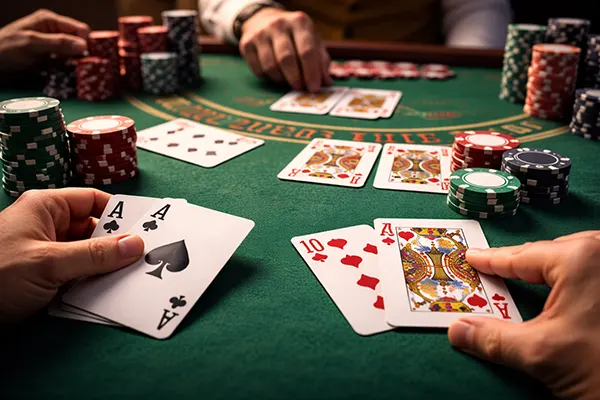
Splitting pairs and doubling down are two important options in blackjack, yet many beginners misunderstand when these actions are allowed. Splitting occurs when the first two cards have the same value, allowing the player to separate them into two independent hands by placing an additional bet equal to the original wager.
After a split, each new hand receives another card and continues independently. However, not all casinos allow unlimited re-splitting. Many tables limit players to three or four hands after splitting. Some also restrict splitting certain pairs such as aces.
Doubling down is another rule that often causes confusion. This move allows the player to double the original bet in exchange for receiving exactly one additional card. The option is usually available only on the initial two-card hand, although some blackjack variants allow doubling after splitting.
Special Restrictions That Affect These Moves
Different blackjack versions include specific restrictions that beginners may not notice immediately. For example, when players split aces, they usually receive only one additional card per hand. This prevents players from building strong multi-card hands from a pair of aces.
Another common restriction concerns doubling after splitting. Some tables permit it, while others do not. When the rule is allowed, players gain slightly more strategic flexibility and the house edge decreases slightly.
Understanding these limits is essential because many blackjack strategies depend on them. Players who assume that all tables follow identical rules may accidentally apply the wrong decisions during play, which leads to avoidable losses over time.