
Why Instant Online Lotteries Are Becoming More Like Slot Games
Instant online lotteries have changed considerably from the first digital scratchcards that simply copied a paper ticket onto a computer screen. By 2026, many games use animated grids, spinning elements, collection meters, multipliers, prize games and multi-stage bonus sequences that would look familiar to anyone who has seen a modern online slot. The resemblance is not accidental: lottery operators have adapted instant-win products to mobile screens and to an audience accustomed to interactive entertainment. Yet visual similarity does not mean the two products are identical. Their legal classification, the way outcomes can be determined and the information presented to players may still differ substantially. Current British National Lottery games provide particularly clear examples of this shift, showing how an instant lottery can borrow the language and presentation of slots while remaining an Interactive Instant Win Game.
Instant Lottery Design Has Moved Far Beyond Digital Scratchcards
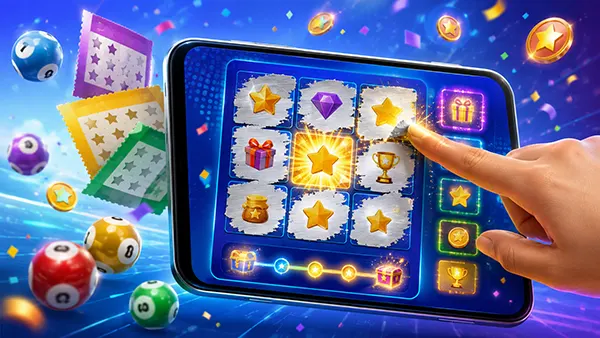
The earliest online instant-win products had an obvious connection with physical scratchcards. A player bought an entry, removed a virtual coating and immediately found out whether the ticket contained a prize. That model remains available, but it is now only one part of the instant-lottery category. Digital delivery gives designers much more room to present the result. Instead of revealing several hidden symbols, a game can move a character across a board, launch objects through a grid, award additional turns, fill a collection meter or move into a separate prize sequence. These actions can make a single purchased entry feel like a short interactive game rather than a simple electronic ticket.
The National Lottery’s current Instant Win Games illustrate how broad the format has become. Its game selection is divided into categories such as Draw & Bingo, Word, Casual Play and Scratch & Reveal rather than treating every product as a digital scratchcard. Current examples include Merlin’s Prize Potions, Cash Bolt Power Spins and Super Puck Shot. The names themselves reflect the change in design language: words such as “spins”, “bonus”, “boost”, “prize game” and “multiplier” now appear naturally in lottery products. A player may therefore interact with a game that looks considerably closer to casual mobile entertainment or a slot than to a traditional numbered lottery ticket.
This change also makes sense on smartphones, where most interactions are based on tapping, swiping and watching short animated responses. A static reveal does not use much of what a modern phone can do, whereas animation can show how symbols are collected, how a prize table fills or why a bonus feature has been activated. Designers can therefore turn a result that might otherwise be communicated in seconds into a clearer sequence of events. The purpose is not necessarily to make the underlying lottery more complicated. In many cases, the mathematics remain straightforward while the presentation becomes richer, more visual and easier to follow on a small screen.
Spins, Bonus Games and Collection Features Create the Slot-Like Feel
One of the strongest similarities comes from the mechanics used to reveal a result. Cash Bolt Grid Locker, for example, starts with eight spins, uses coordinates to fill a prize table and can unlock a Bonus Game containing additional game boosts. Completing particular parts of the table can produce prizes, while the bonus sequence introduces elements such as locked coordinates and additional matching opportunities. The game costs £5, has an advertised overall chance of winning of 1 in 2.75 and an expected prize payout of 74%. Those spins, boosts and separate bonus stages create a rhythm that resembles features commonly associated with slots, even though the game is sold as a National Lottery Instant Win Game.
Super Puck Shot takes a different route. A £2 play begins with pucks that travel across an ice-style grid, revealing coloured symbols and special symbols. Collecting enough Bonus Game symbols can lead to another stage, while Prize Game symbols can open a guaranteed Prize Game. Super Pucks can double the number of symbols collected during a shot. Its published overall chance of winning is 1 in 2.62 and its expected prize payout is 70%. There are no conventional slot reels, but the sequence of a main feature, symbol collection, special modifiers and an additional prize feature creates a similar sense of progression.
Other games demonstrate the same trend without copying a slot layout. Sunny Money costs £2 and gives three plays in which matching symbols can produce prizes. It also includes instant-win symbols, a possible multiplier of up to ten times the total prize and a Pool Prize Game. Cash Stacks begins with six goes and allows players to collect gems that can unlock one of several bonus sequences, including a wheel, a pick feature and a match-three feature. These mechanics show why the boundary can appear blurred from the player’s point of view. What is being borrowed is mainly the presentation vocabulary of interactive gambling games: collections, meters, bonuses, multipliers, additional turns and animated prize reveals.
The Similarity Is Mainly in Presentation, Not in Game Classification
Looking similar on screen does not automatically make an instant lottery a slot. The Gambling Commission describes a scratchcard as an instant-win lottery in which a draw takes place before or at the point when the participant purchases the ticket. The card can be physical or virtual, and remote instant-win products can also use random-number generation. This is an important distinction because an animation shown after purchase does not necessarily represent the moment at which the winning result is created. It may simply provide an interactive way of revealing a result that has already been assigned under the rules of that particular game.
The National Lottery states this very clearly in the procedures for games including Sunny Money, Super Puck Shot, Cash Stacks, Cash Roll and Cash Bolt Grid Locker. Their outcomes are described as being predetermined by Allwyn’s computer system at the point of purchase, and the player does not need to exercise skill or judgement to win. That means tapping an arrow, selecting a virtual safe or watching a wheel move should not be interpreted as an opportunity to improve the probability of receiving a prize. The player’s actions control how the purchased game is presented on screen, but they do not turn it into a skill contest.
A conventional online slot generally treats each paid spin as the gambling event, with its result produced according to the certified rules and random-number system of that game. An Interactive Instant Win Game can use a different structure even when its interface includes a button labelled “spin”. This is why appearance alone is a poor way to identify a gambling product. A grid, multiplier or bonus sequence tells the player how the result will be displayed; it does not by itself explain the legal category or the method used to determine prizes. The game rules and published procedures are therefore more useful than its visual theme when trying to understand what is actually being played.
Why Lottery and Slot Interfaces Are Converging
There is also a practical reason for this convergence: players now use the same phones, tablets and browsers for many different types of digital entertainment. Familiar controls reduce the amount of explanation required before a game can be understood. A clearly labelled play button, a visible counter showing remaining turns and a meter showing progress towards a prize feature can communicate information much faster than several paragraphs of instructions. Lottery games can adopt those conventions without adopting every characteristic of a slot.
Bonus rounds are particularly useful because they divide a game into understandable stages. Instead of displaying all information at once, a game can begin with several turns, show symbols being collected and then move into a second screen when a requirement has been met. This gives the player a clear sense of sequence. Multipliers serve a similar purpose: rather than displaying only a final monetary result, the game can show how a smaller prize becomes a larger one. These are familiar ideas in slots, but they also work effectively as methods of visualising predetermined instant-win outcomes.
The range of current National Lottery game categories shows how far instant products have expanded beyond scratch-and-reveal design. Word games can use crossword-style grids, Draw & Bingo titles can present numbered balls or cards, and Casual Play games can borrow ideas from simple mobile games. £1 Million Prize Bingo, for example, combines six bingo cards with 50 balls and a separate Prize Game, while Cashword Millionaire uses a crossword grid, selectable letters and special features that can alter the displayed prize progression. These products remain games of chance, but their presentation gives each title a recognisable identity instead of making every instant lottery feel like the same ticket with different artwork.
2026 Rules Show How Important Interactive Instant Games Have Become
The development of these games is also visible in British regulation. On 8 April 2026, the Gambling Commission approved changes to the National Lottery’s Interactive Instant Win Games licence that increased the permitted upper game-price limit from £5 to £10 and changed the top-prize limit from £1 million to £4 million. These figures are licence limits rather than a statement that every game costs £10 or offers £4 million. Current games continue to appear at a range of lower prices. The decision nevertheless demonstrates that Interactive Instant Win Games are now treated as a significant and distinct part of the National Lottery product range rather than merely an electronic version of a shop-bought scratchcard.
Regulators have also recognised that instant-win and high-frequency lottery products can behave more like other forms of online gambling than traditional subscription lotteries do. In its response concerning remote financial-limit requirements, the Gambling Commission noted that accounts offering high-frequency lotteries and instant wins commonly use wallet-style funding similar to other online gambling accounts. It also acknowledged industry observations that high-frequency lottery provision can be structured in ways comparable with online products such as slots. That does not merge the legal categories, but it helps explain why some consumer-protection requirements extend to instant-win lottery operators.
British remote gambling standards consequently require important information to be available before a player commits money. Relevant games and lotteries must provide understandable rules and information that allows customers to assess their chances of winning, including an RTP percentage or the probability of winning where appropriate. The standards also cover random outcomes, while customer-interaction requirements apply to remote lottery operators that provide instant-win or high-frequency lotteries. The regulatory direction is therefore clear: as lottery products become faster and more interactive, safeguards increasingly need to reflect how people actually use them, not simply the historical image of a lottery as a weekly numbered draw.
What Players Should Check Before Treating an Instant Game Like a Slot
The most useful information is usually found in the game procedures rather than in the animation. Players can check the price of one play, the overall probability of receiving any prize, the expected payout percentage and the top prize before buying. The numbers can vary noticeably between games. Sunny Money, for example, publishes an overall chance of 1 in 2.67 and an expected payout of 70%, while Cash Bolt Grid Locker gives 1 in 2.75 and 74%. £1 Million Prize Bingo lists 1 in 2.75 and 73.5%. An expected payout percentage describes the mathematical return across a very large number of plays; it is not a prediction of what one individual will receive during a session.
Players should also distinguish between an interactive choice and a choice that changes the probability of winning. A game may ask someone to select an object, shoot a puck, choose a direction or activate a virtual wheel. Those actions can make the game more engaging, but in National Lottery examples where the result is predetermined at purchase, they do not provide a method for beating the game. The same caution applies to a bonus feature. Reaching a bonus screen can make a play look as though a new gamble has begun, yet the published procedures may show that the entire result belongs to the original purchased entry.
The growing similarity to slots also makes spending controls more relevant. Instant games can be completed far more quickly than a weekly or twice-weekly draw, so several purchases may take place in a relatively short period. The National Lottery uses a 24-hour purchasing limit for Instant Win Games and provides tools for setting limits, taking time out and moderating instant-game access. Players must be 18 or over and physically located in the UK or Isle of Man when using a National Lottery account online. The central change in 2026 is therefore not that instant lotteries have literally become slots, but that their interfaces, pace and bonus structures increasingly occupy similar territory. Understanding the published odds, payout information and result rules remains the simplest way to see where the resemblance ends.